Hedge Cutting

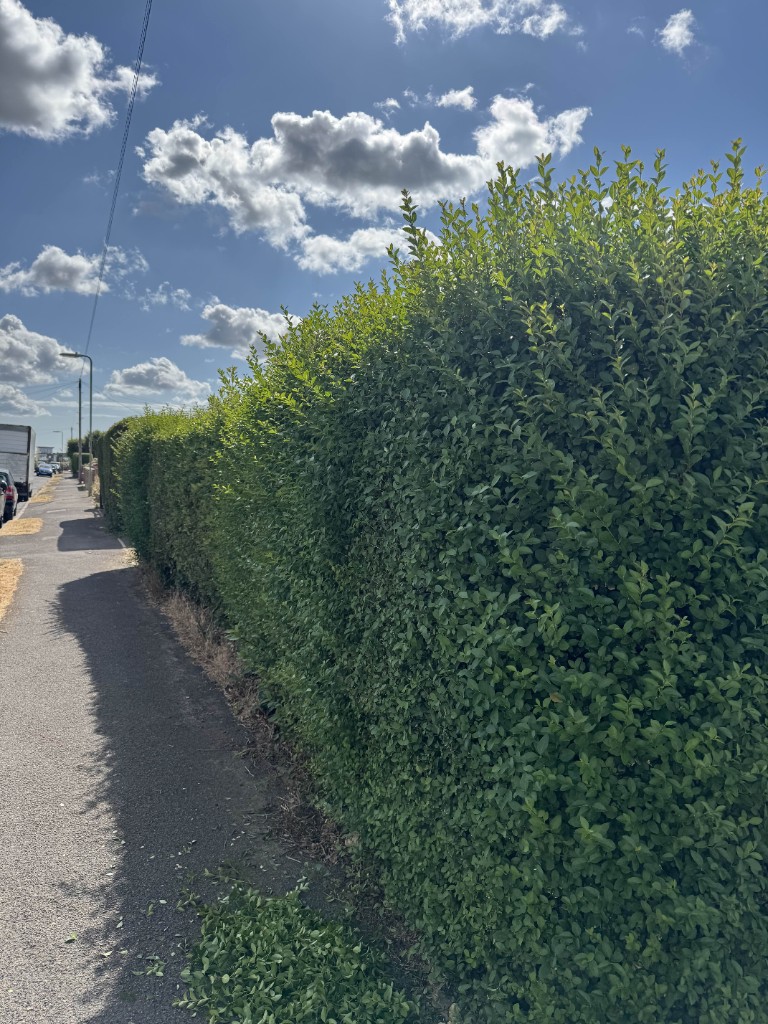
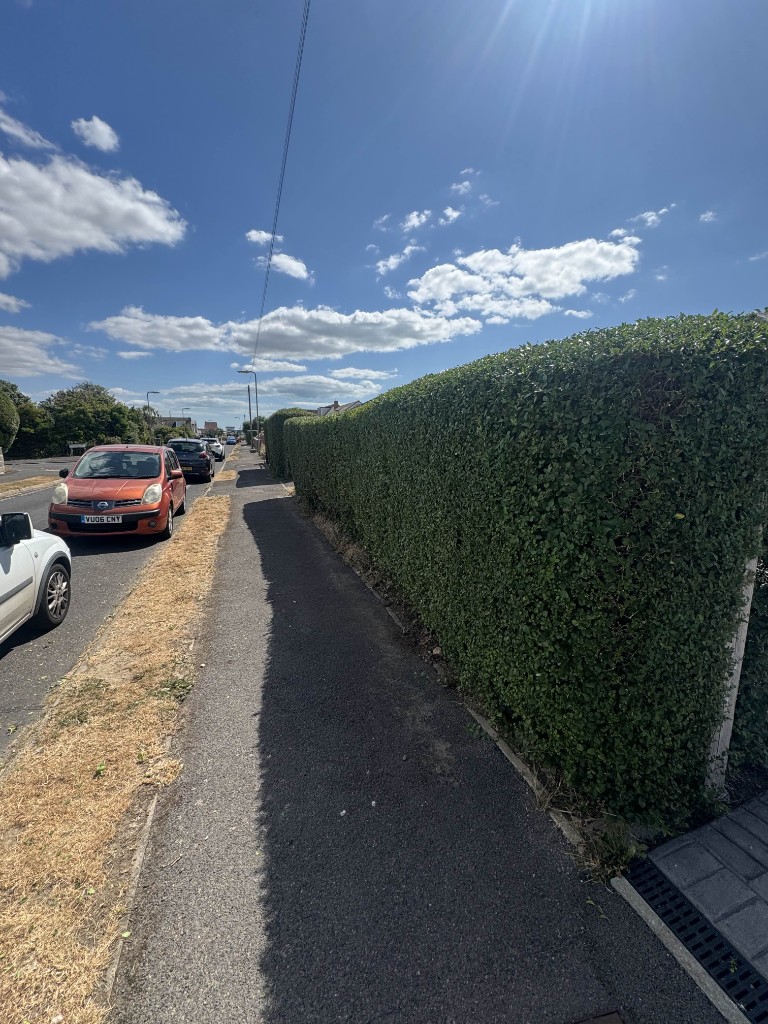
Hedge cutting on Hayling Island and Havant.

Hedges are the bulk of what we do. Conifer, leylandii, privet, laurel, beech, yew and box, cut and shaped across Hayling Island, Havant, Emsworth, Waterlooville and Cosham. We bring our own kit, and the clippings leave with us.

What we cut

Different hedges want different treatment.

Most of the hedges around here fall into one of a handful of types, and each one has its own quirks. Knowing them is the difference between a hedge that thickens up and one that goes bare.

Conifer & Leylandii

The most common hedge we get called to, and the easiest one to ruin. Conifers won’t reshoot from old brown wood, so a leylandii cut back past the green stays bare on that side permanently. Height is different — you can take the top down hard and it will green over. We reduce height as far as you want and keep the sides inside the green.

Privet

Quick, forgiving and happy to be cut hard. Privet usually wants two or three cuts between May and September to hold a sharp edge. Left to one cut a year it gets leggy and thin at the base, though unlike conifer it will come back if you take it right down.

Laurel

Big glossy leaves, which is the problem. A hedge trimmer chops them in half and the cut edges brown off within a week or two. On a laurel that’s on show we go through it with secateurs and cut whole leaves off at the stem instead. Slower, and it costs more, but it looks right afterwards.

Beech & Hornbeam

One cut in late summer is normally enough. Cut at the right point in the year, both hold their dead copper leaves right through winter, which is why they screen better than anything else that drops its leaves. Cut too early and they push out soft growth that browns off.

Yew, Box & Topiary

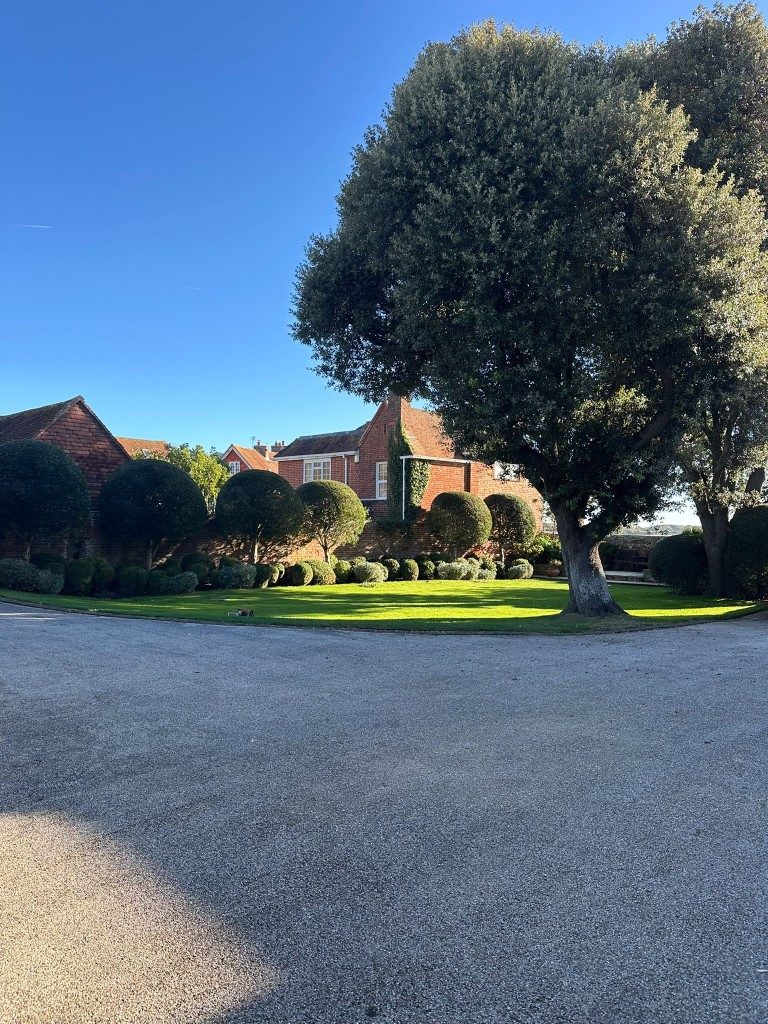
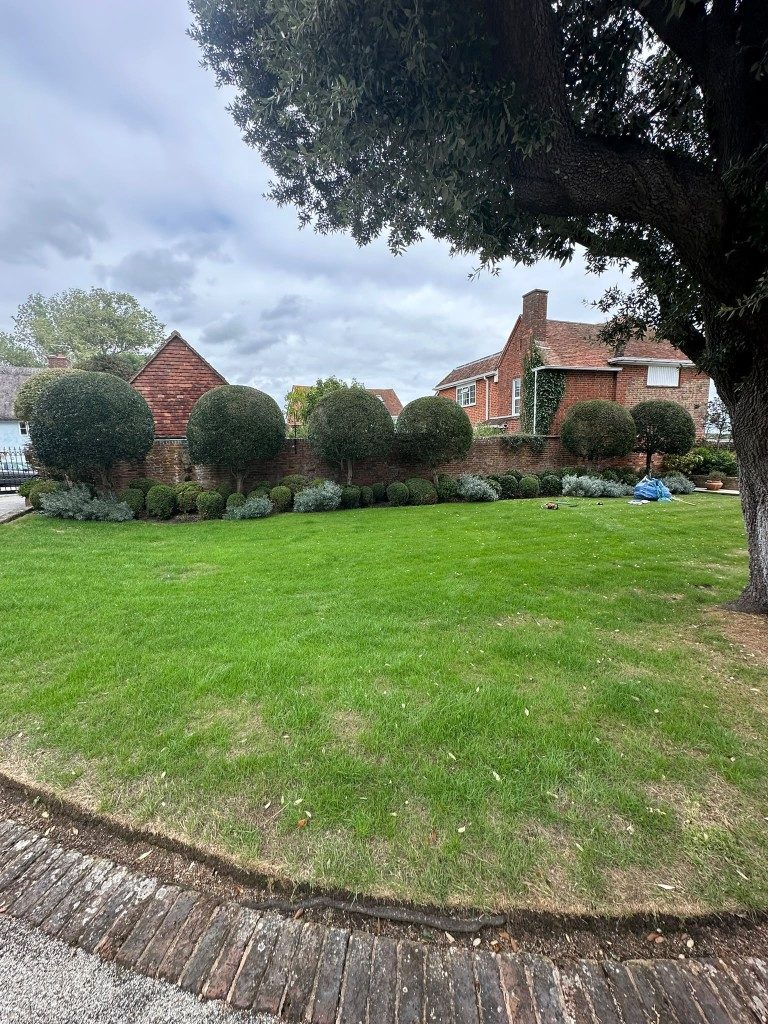
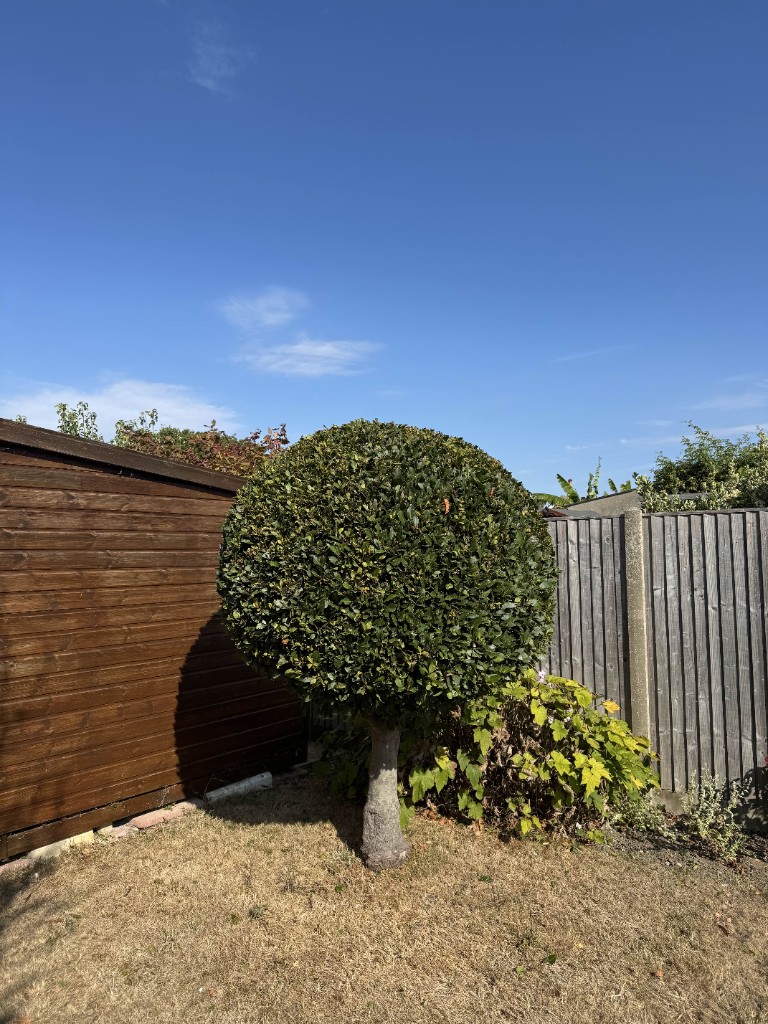
Yew is the one conifer that breaks the rule — it takes a hard cut back into bare wood and comes back, which makes it the best hedge going for renovation. Box, yew and bay topiary we clip by eye: balls, cones, cottage loaves and lollipop standards.

Mixed & Native Hedging

Hawthorn, blackthorn, hazel and field maple, the sort of boundary hedge you get along a lane. These are cut in winter once the leaves are off and the birds have gone, and they take a hard cut without complaint.

Overgrown hedges

Hedges that got away from you.

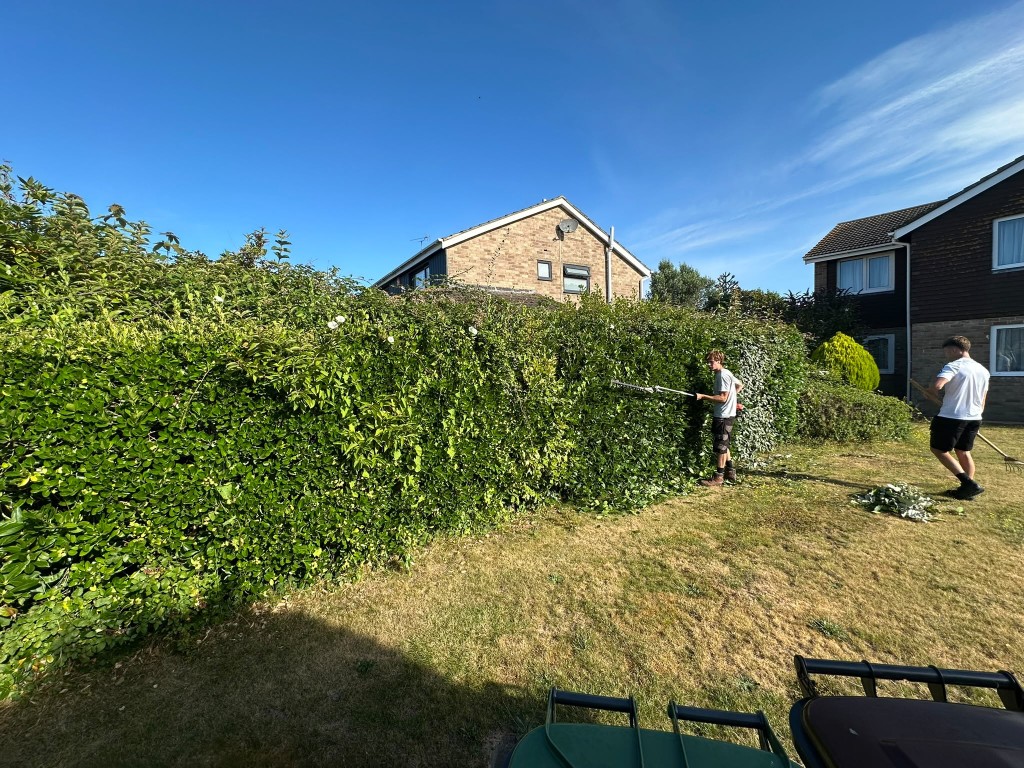
A fair bit of our work is hedges nobody has touched in years. Ones that have doubled in width and taken a metre off the garden, ones blocking a window, ones that have grown out over a pavement.

Most of it is straightforward, it just takes longer than a routine trim and produces a lot more waste. What matters is knowing how far back a particular hedge can go. Privet, yew, hornbeam and laurel will all take a hard cut and recover. Leylandii and other conifers won’t, on the sides at least, so with those it’s about getting the height down and tidying the faces without going into the brown.

On a badly overgrown hedge we’ll sometimes stage it over two seasons: one side cut hard the first year, the other the year after, so the plant is never stripped all at once. If that’s the sensible route we’ll tell you, and if a hedge is too far gone to save we’ll say that too rather than take your money for it.

Timing

When to cut, and nesting birds.

Most formal hedges do best on two cuts a year, one in late spring and one in late summer or early autumn. Fast growers want three. Beech and hornbeam are usually fine on a single August cut. Renovation, where a hedge is taken back hard into old wood, is winter work while the plant is dormant.

The bigger constraint is birds. Nesting birds are protected under the Wildlife and Countryside Act 1981, and it’s an offence to damage or destroy a nest while it’s in use or being built. The main season runs March to August.

That doesn’t mean no hedge can be touched all summer, but it does mean checking properly first. We look a hedge over before starting, and if there’s an active nest in it we leave that section alone and come back once they’ve fledged. If you want a hedge done and you’re not sure whether it’s occupied, ring us and we’ll come and look.

Our work

Hedges we’ve cut.

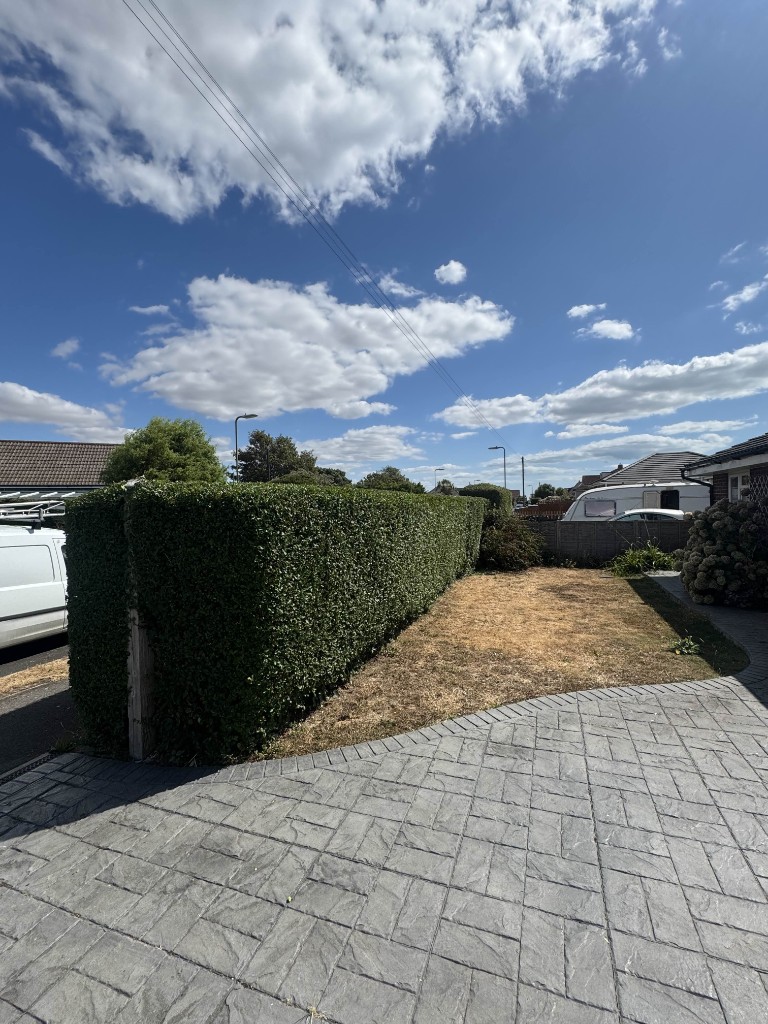
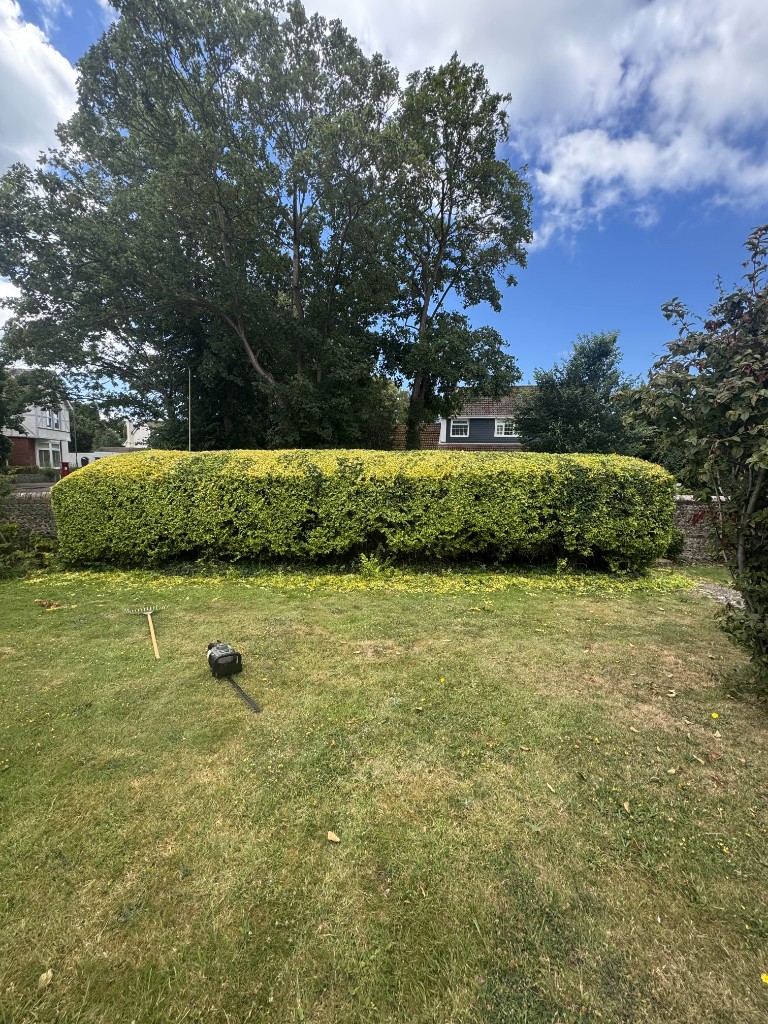
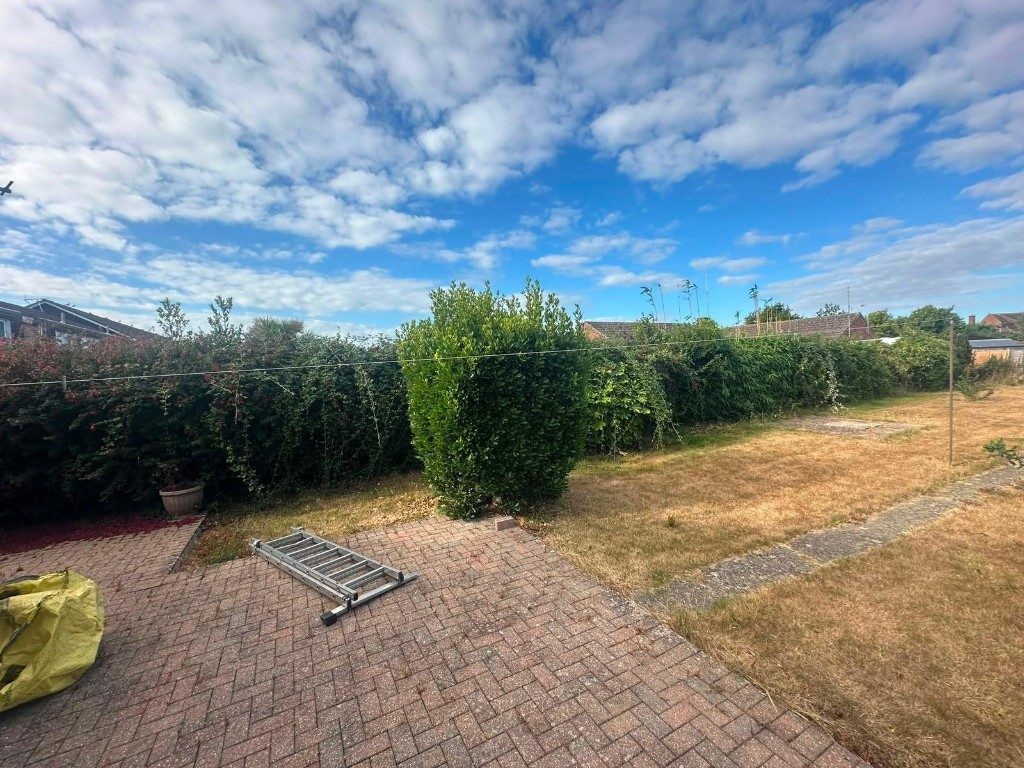
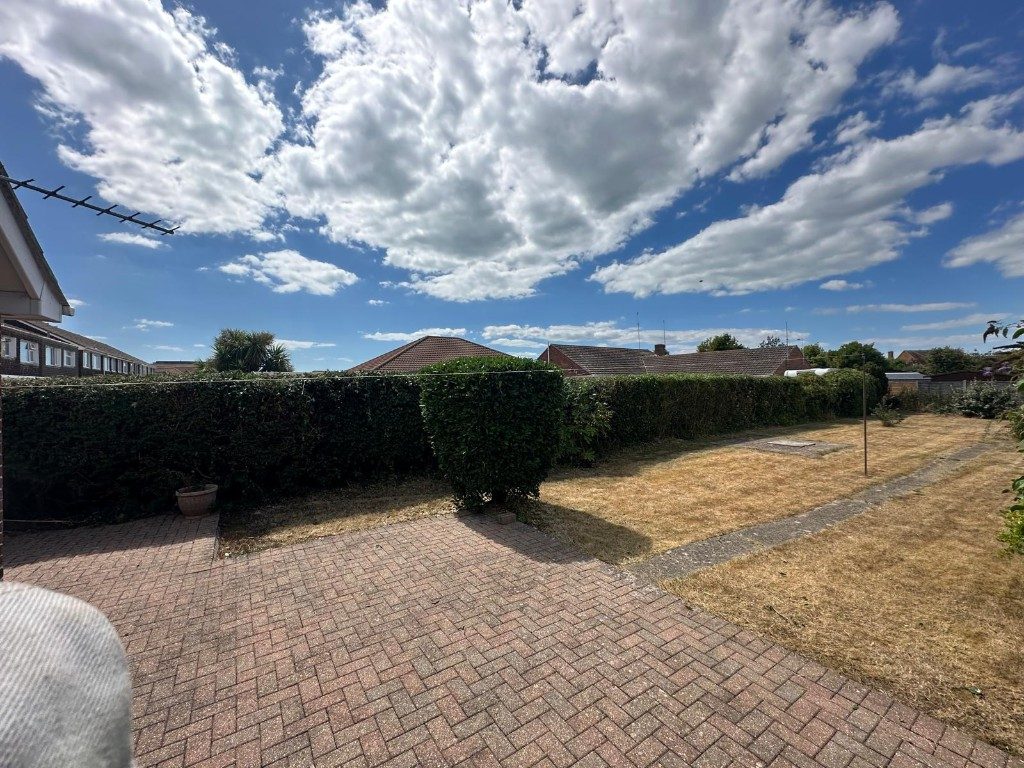
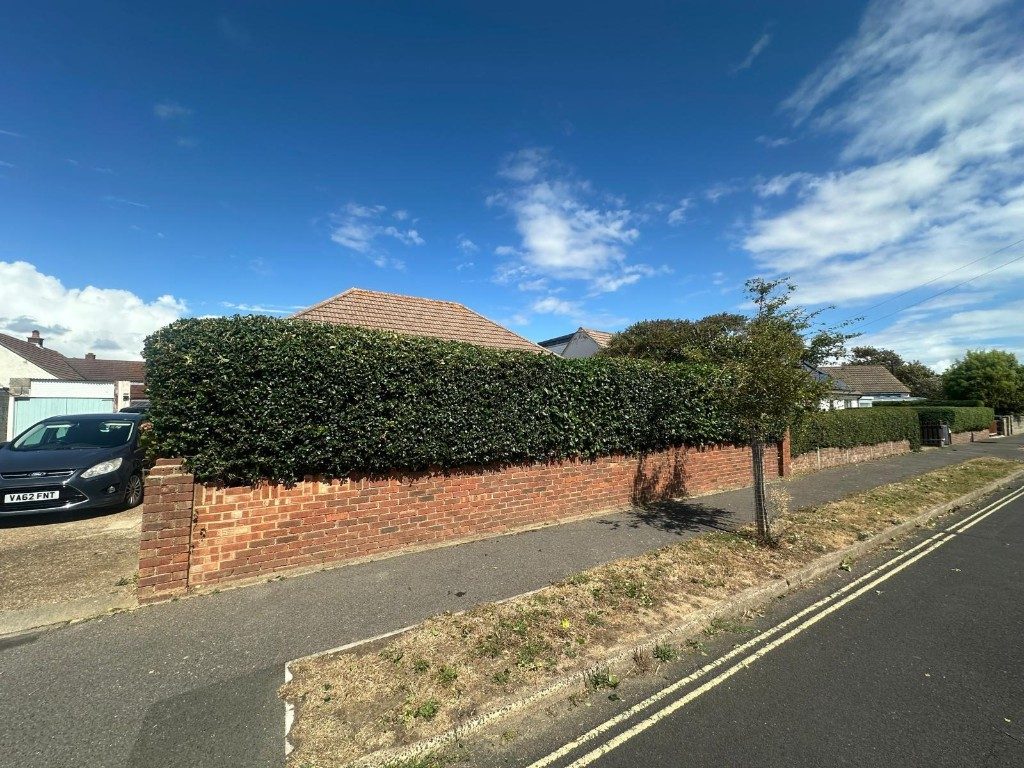
All our own photographs, from gardens and roadsides around Hayling Island, Havant and Emsworth.

What it costs

£22 an hour, per person.

That’s the rate for hedge work, same as everything else we do. Most domestic hedges are a morning’s work for the two of us. A long roadside run or a heavy reduction can take a full day.

What moves the price is length, height, how overgrown it is, and whether the waste goes with us. We’ll give you a fixed figure before anything starts, so you’re not watching the clock. Quotes are free and we usually get out to look within a few days.

If you’d rather keep the clippings for a compost heap or a log pile, say so and we’ll stack them somewhere out of the way. It knocks the disposal cost off.

Where we work

Hedge cutting near you.

We’re based on Hayling Island and cover the Havant and Portsmouth border.

Hayling Island is home, so most weeks we’re on the island anyway. A lot of hedges here are salt-tough stuff — escallonia, griselinia, tamarisk — because of the wind coming off the water.

Havant, Bedhampton and Emsworth are a short run over the bridge and make up a good share of our regular hedge rounds.

Waterlooville, Cosham, Purbrook, Widley, Drayton, Farlington, Denmead and Rowlands Castle are all comfortably within reach, along with the northern edge of Portsmouth.

If you’re just outside that, ring anyway. We’ll tell you straight if we can get to you.

FAQ

Hedge questions we get asked.

Will a leylandii grow back if you cut it hard?

Not on the sides. Leylandii and most other conifers won’t reshoot from old brown wood, so if the sides are cut back past the green growth that section stays bare for good. The height is a different matter — you can take a leylandii down as far as you like and the top will green over. So we reduce height freely and keep the sides trimmed within the green.

When should a hedge be cut?

Most formal hedges want two cuts a year, one around late spring and one in late summer. Fast growers like privet often need three to hold a crisp edge. Beech and hornbeam are usually fine with a single cut in August. Renovation work, where a hedge is taken back hard, is best done in winter while the plant is dormant.

Can you cut a hedge during bird nesting season?

Nesting birds are protected under the Wildlife and Countryside Act 1981, and it’s an offence to damage or destroy a nest while it’s in use or being built. The main nesting season runs March to August. We check a hedge before starting, and if there’s an active nest we leave that section and come back once the birds have finished.

How much does hedge cutting cost?

£22 per hour, per person. Most domestic hedges are done inside a morning. Cost depends on length, height, how overgrown it is and whether the clippings need taking away. We give you a fixed figure before we start, and quotes are free.

Do you take the hedge clippings away?

Yes, unless you’d rather keep them. Some customers want the clippings for a compost heap or a log pile, which is fine and saves you the disposal cost. Otherwise everything goes with us and the ground gets swept before we leave.

How tall a hedge can you cut?

We work off ladders and platforms and regularly cut well above single storey height. If a hedge has gone beyond what can be reached safely, or it’s grown into overhead cables, we’ll say so rather than take it on.

Do you cut hedges that overhang a pavement or road?

Yes, and it’s worth staying on top of. As the property owner you’re responsible for keeping your hedge from blocking a public footpath. We cut roadside hedges back to the boundary, sweep the path afterwards, and work with cones where a job needs them.

Do you do anything besides hedges?

Yes — lawn mowing, garden maintenance, weeding, mulching, fencing and ivy removal. Hedges are just what we do most of. There’s a full list on the main page.
Get a quote

Get your hedges booked in.

Free quotes for hedge cutting across Hayling Island, Havant, Emsworth, Waterlooville & Cosham.

Call 07469 237953 Based Hayling Island, Hampshire Hours Mon–Sat, 8am–6pm